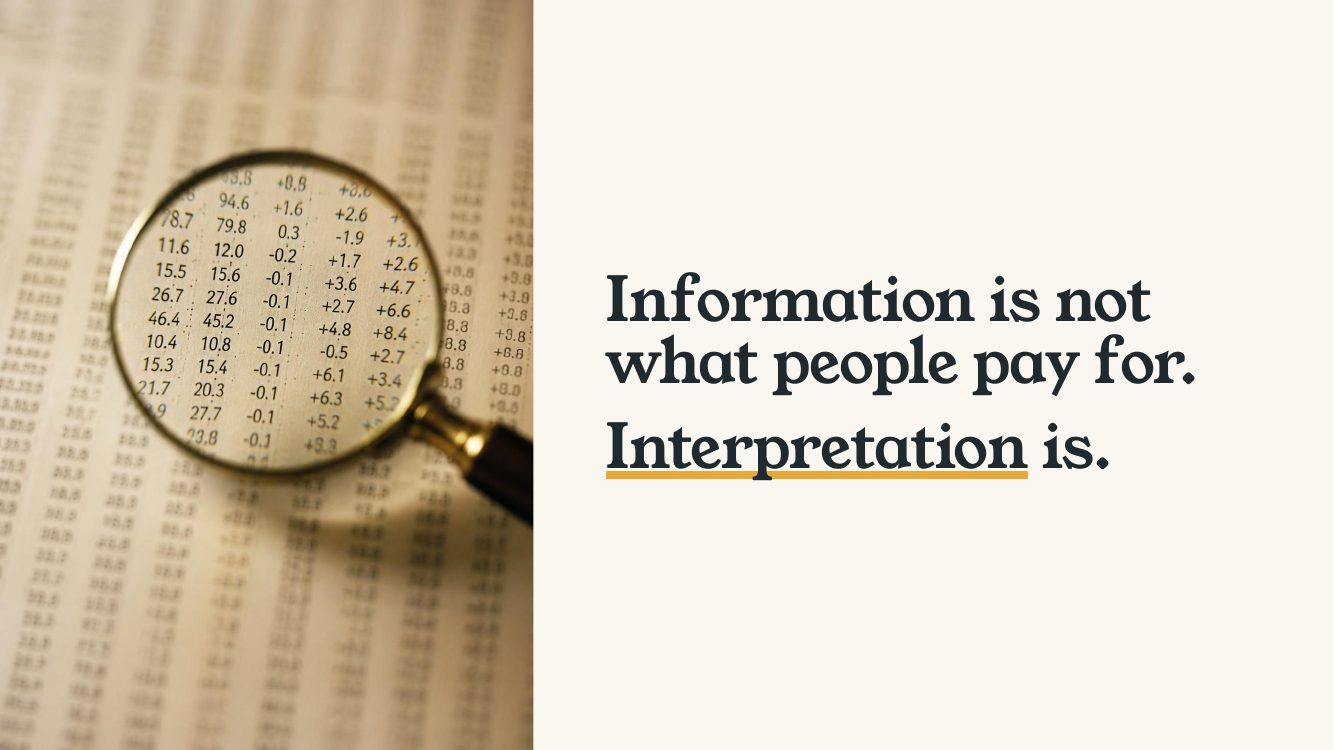
I wrote this down around two thousand thirteen and it sounded slightly theoretical at the time, the kind of thing a coach says from a stage to sound ahead of the room. It does not sound theoretical anymore. I have since written an entire book about what it means, and I have spent every working day since December of two thousand twenty two with the very machines that made the sentence come true, and I am more certain of it now than I was when I first said it. Information is not what people pay for. Interpretation is.
When I Started

Let me tell you what the world looked like when I started, because the people I coach who are under forty cannot picture it and the people over sixty have half forgotten. When I began, the professional in my industry held the book. Literally a book, printed on paper, updated weekly, and if you wanted to know what was for sale in a town you had to know someone who had the book. The comparable sales lived in a filing cabinet.

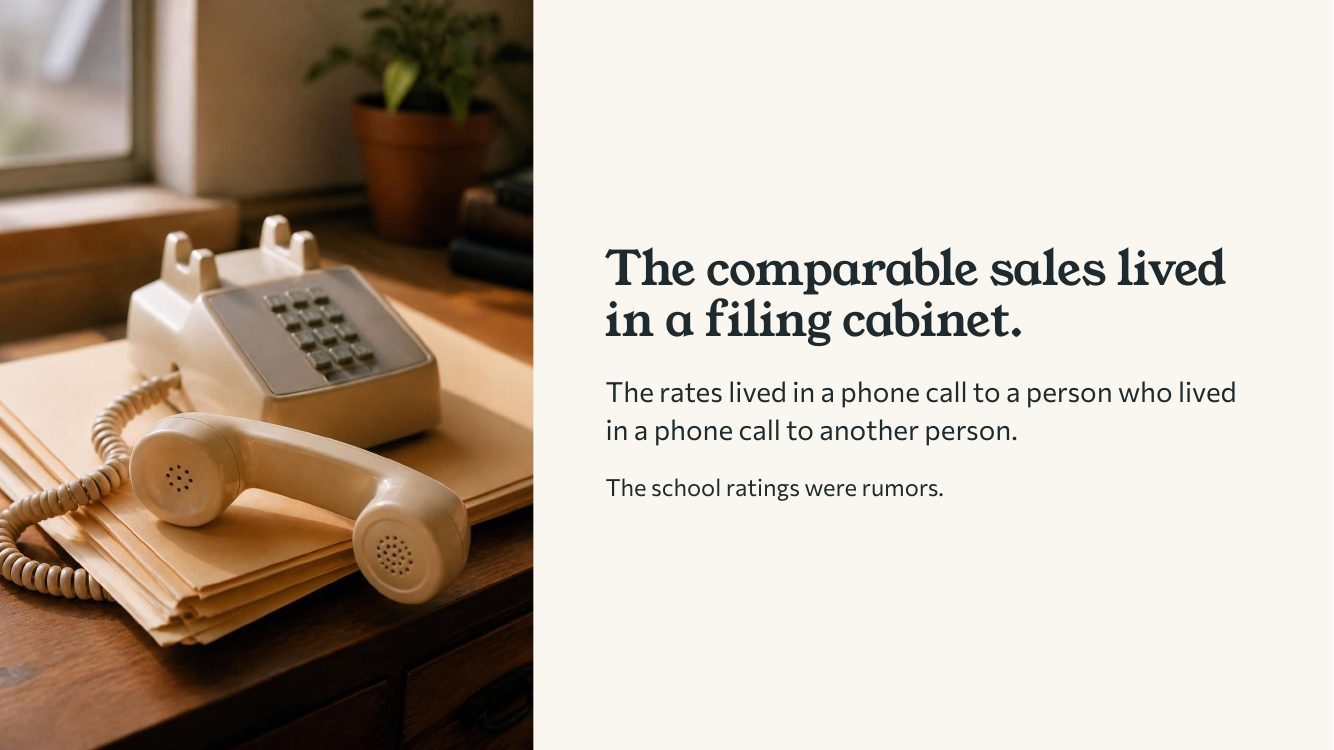
The rates lived in a phone call to a person who lived in a phone call to another person. The school ratings were rumors. Days on market was something you knew because you had been paying attention. For twenty years the professional’s power came substantially from holding information other people could not reach, and a great many careers were built on nothing more than that, on being the one who had the book.
Then It Vanished

And then, every year, a little more of it vanished. First the listings went online. Then the comparables. Then the rates, updated hourly, for anyone with a screen. Then the school data and the crime data and the flood maps and the tax history and the permit records and the number of days the house down the street took to sell, and every year the professional who had been standing on that pile of information found the pile a little lower under their feet, and most of them did not notice, because it went slowly.
Now it is gone completely. There is nothing left in the pile. A machine will produce a competent analysis of any of it in four seconds, and the analysis will be better organized than the one most professionals would have produced in an afternoon, and it will be free, and the client knows this, and the client did it before they called you.
What Is Left

So what is left. And I want you to hear that as a real question and not a rhetorical one, because it is the only business question that matters now, and almost nobody in my industry has sat down and answered it honestly, because the honest answer is frightening for about a minute and then it is liberating. What is left is interpretation of information that is clearly connected to a person’s goals, dreams and aspirations. The last half of that sentence is the whole thing.
Not interpretation in general. Interpretation against their particular life. Because the machine can interpret too, now. It can tell you what the trend means and what the rate movement suggests and which neighborhood is appreciating fastest. What it cannot do, what it has no way to do, is tell this family whether this house is the right decision for a marriage under strain, a mother moving in next spring, and a daughter starting eighth grade who has already changed schools twice.
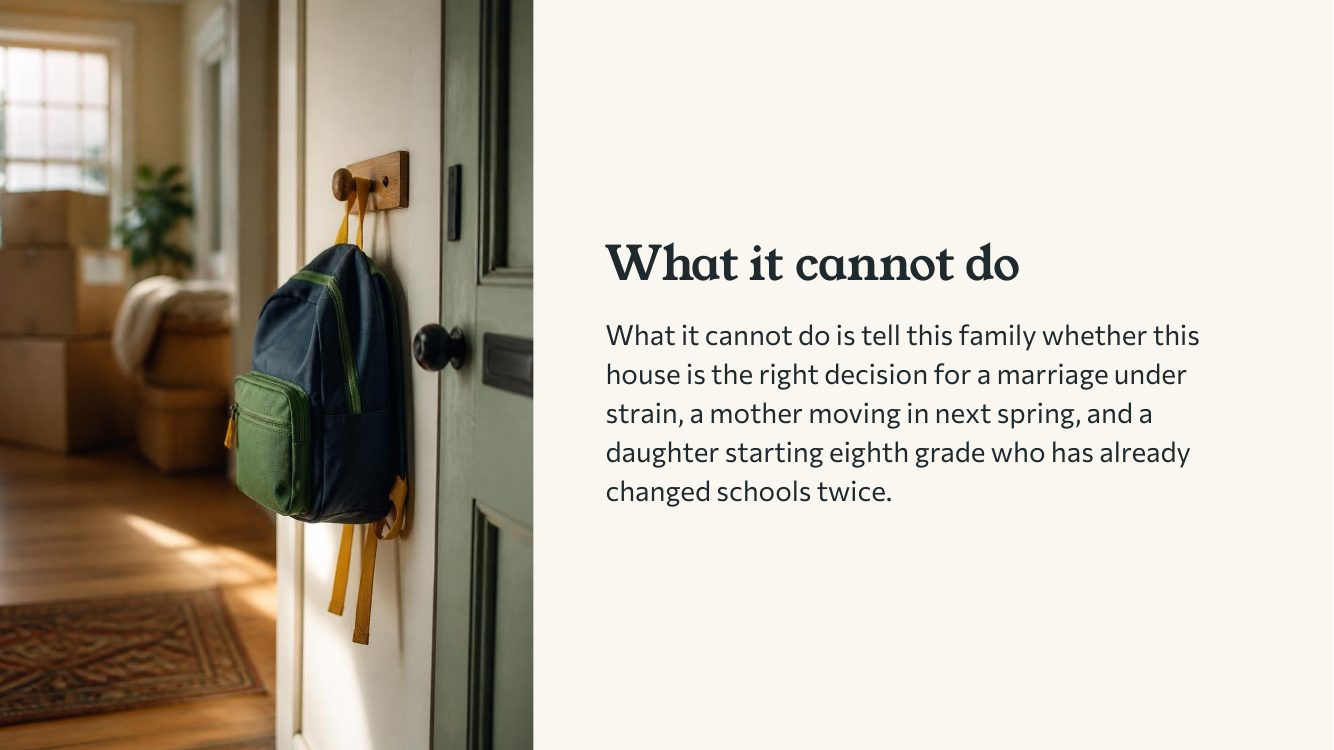
That is not an information problem. It never was. It is a problem of meaning, and meaning requires someone who knows the family, and knowing the family requires having gone down into their life far enough to understand what the house is actually for. And here the whole book comes back around on itself, because interpretation has a prerequisite that most people skip. You cannot interpret against a life you have not gone down into.
This is why the five, six and seven, the practice of asking what is important about that to you until you reach the floor, is not a rapport technique. It never was a rapport technique, though it was taught as one for decades, including by people who learned it from me. It is the input to the only service that still has value. Without the descent there is nothing to interpret against. You are just a person with opinions about houses, and the machine has better opinions about houses than you do.
Three Verbs

I eventually got what people will pay for down to three things, and I keep them as verbs, on purpose, because verbs describe what you do rather than what you are, and clients experience what you do. Lead. Go first. Take a position. Tell them what you would do if it were your money and your family and your Saturday.
Most professionals present options and stop there, and to be fair to options, a person has every right to see them and a professional who hides them is doing something dishonest. But handing someone five doors and no opinion is very often the safer thing for me rather than the more useful thing for them. It protects me from being wrong. It protects them from nothing. People are drowning in options. What they cannot find anywhere, at any price, from any machine, is someone who knows them well enough to say, this one, and here is why, and I will stand behind it.
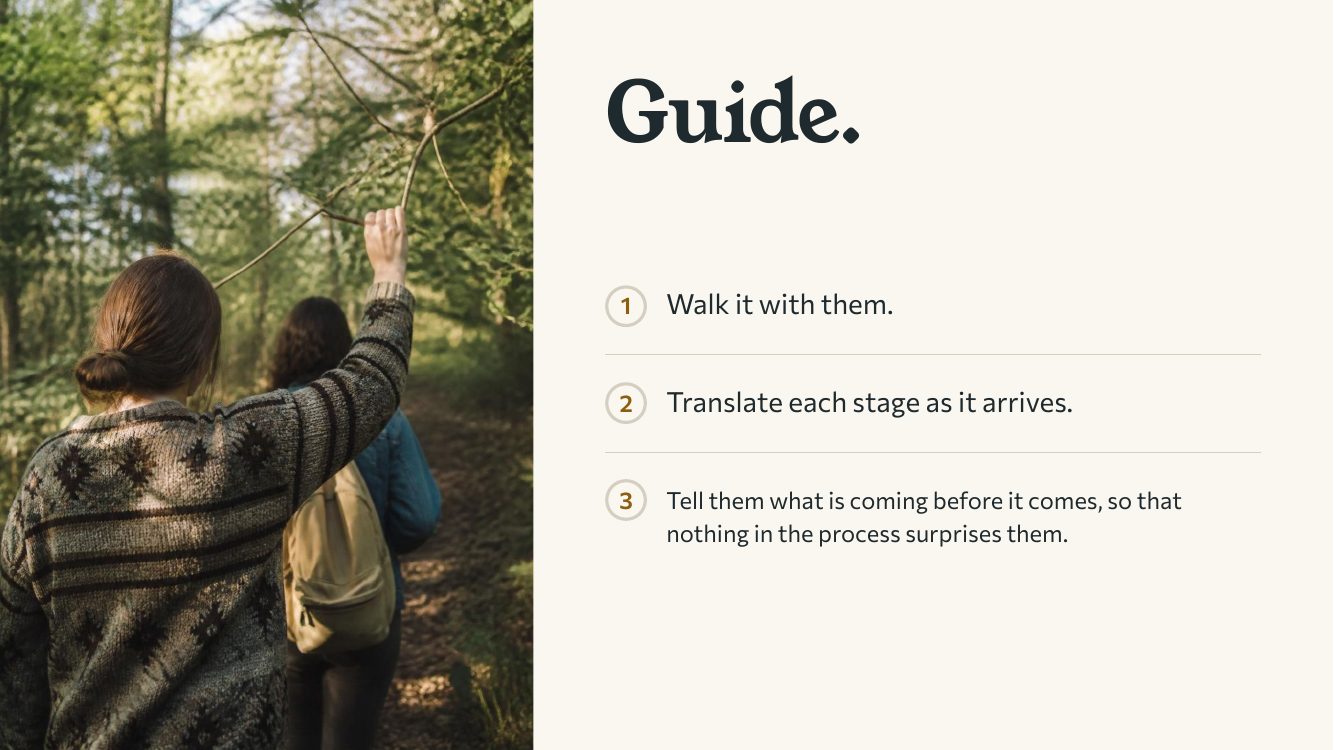
Guide. Walk it with them. Translate each stage as it arrives. Tell them what is coming before it comes, so that nothing in the process surprises them, so that the inspection report and the appraisal and the underwriter’s third request for a document they already sent do not feel like the ground giving way. Guiding is not information. The information about the process is free too. Guiding is presence at each step, in the order the steps arrive, by someone who has walked it a thousand times and remembers it is their first.
Nobody Thanks You

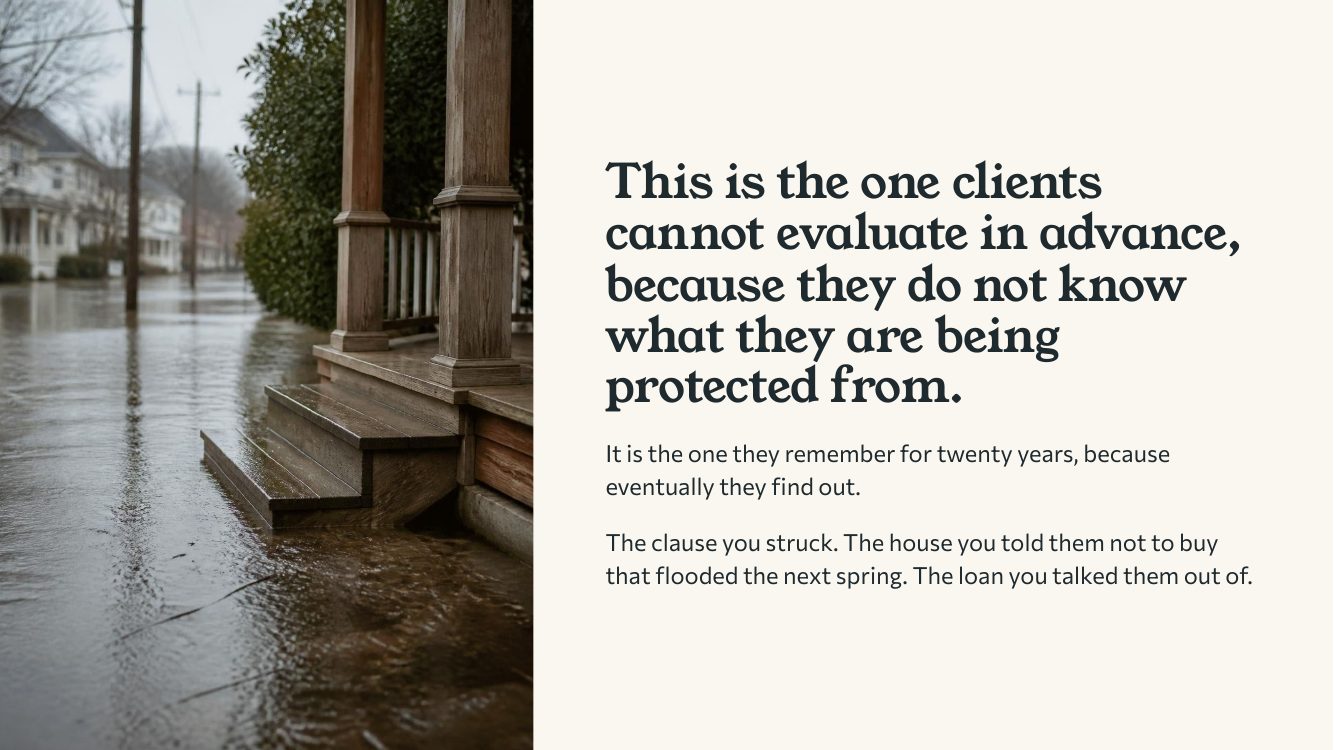
Protect. See what they cannot see yet, and stand between them and it. This is the one clients cannot evaluate in advance, because they do not know what they are being protected from, and it is the one they remember for twenty years, because eventually they find out. The clause you struck. The house you told them not to buy that flooded the next spring. The loan you talked them out of that would have reset in three years.

Nobody thanks you for these at the time. They thank you a decade later, at a dinner table, to someone else, and that thank you has your name in it. When someone asks what you do, those three words are a better answer than your job title, because a job title describes a service rendered and those words describe a felt state. Nobody remembers being serviced. Everybody remembers being led, guided, and protected, and they remember it in their body.
Here is the part that has aged best, and I say it now with far more force than I did in two thousand thirteen, because I have watched it happen in real time. When information becomes free, value migrates to meaning. That is not a prediction anymore. That is the market you are standing in this morning, and it is the market I stand in too, because everything I ever taught can now be summarized by a machine in a paragraph, and the summary will be accurate, and it will change no one, because a summary is information and what changed the people I coached was never the information. It was a person who knew them saying, based on everything you have told me, here is what I think this means for you.
I have spent the last several years working alongside these machines more intensely than almost anyone I know in my field, and the deeper I have gone, the more certain I have become of this chapter. The machine has made me faster. It has made me better organized. It has read my forty years of work back to me and found patterns I had missed. And it has never once known what a thing meant for a particular person sitting across from me, because it was not there, and it does not love them, and it has not gone down into their life with them the way a human being can. Meaning is made by a human being who knows another human being. Everything else is now a commodity, including most of what you were trained to do.
Be Ruthless
So here is the question, and it is worth a page in your journal rather than a quick answer, because the quick answer will be a job title and the job title is what is being commoditized. Strip out everything you deliver that can now be looked up, generated, or downloaded. Be ruthless. Take out the market analysis and the listing presentation and the rate comparison and the neighborhood report and the process explanation and the paperwork. Take out everything a screen can do.
What is left? And then test whatever is left against one memory, because the test will tell you the truth faster than the page will. Name a single recommendation you changed because of something you learned about the person in front of you. Not their situation. Not their budget or their timeline. Them. Who they are, what they are afraid of, what they are actually trying to build.
If the example arrives fast, if you can see the face and remember the moment you changed your mind because of who they were, then interpretation is already your business and you have simply been undercharging for it. If nothing arrives, if you sit there and cannot find a single time your advice bent around a human being rather than a set of facts, that is worth investigating rather than concluding, because it may mean you have been selling information for a very long time, and information just went to zero. Either way, that remainder, the thing left on the page after the ruthless stripping, is your actual business. For most people it is much smaller than they thought. And it is much more valuable than they ever charged for.